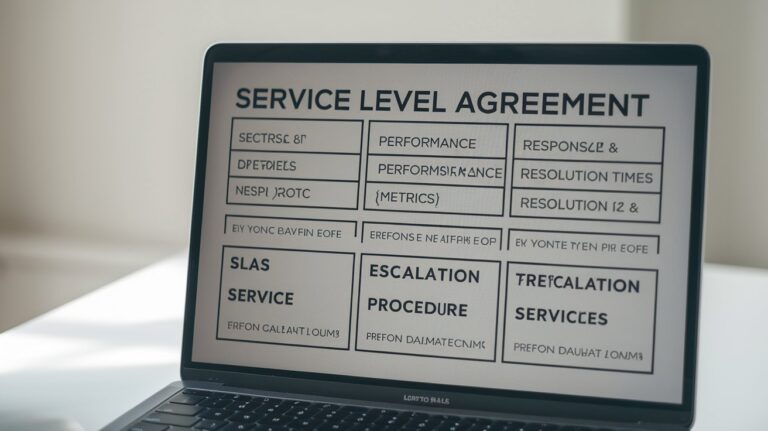
Service Level Agreement Template: Free SLA Templates & Examples
A service level agreement template serves as the foundation for defining service expectations between providers and clients. These standardized documents outline performance metrics, responsibilities, and remedies for service failures. With proper SLA templates, businesses can establish clear communication channels and measurable service standards that protect both parties’ interests.
What is a Service Level Agreement Template
A service level agreement template is a pre-formatted document that establishes the framework for service delivery expectations between a service provider and client. This legal contract template defines specific performance metrics, response times, and quality standards that must be maintained throughout the service relationship. Modern SLA templates include measurable objectives, penalty clauses, and escalation procedures to ensure accountability.
According to 2024 industry data, companies using structured service level agreement templates report 35% fewer service disputes and 28% improved client satisfaction rates. The document typically includes service availability requirements, performance benchmarks, monitoring procedures, and remediation processes. Professional templates streamline the negotiation process while ensuring all critical service elements are addressed comprehensively.
Types of Service Level Agreements
Understanding the three types of SLAs is essential for selecting the appropriate template for your business needs. Each type serves different organizational structures and service delivery models.
Customer-Based SLA Templates
Customer-based service level agreement templates focus on individual client requirements and customized service delivery. These SLA templates cover all services provided to a specific customer, including response times, resolution procedures, and performance metrics. The template structure accommodates unique client needs while maintaining standardized measurement criteria and reporting mechanisms.
Service-Based SLA Templates
Service-based templates define service level expectations for specific offerings across multiple customers. These standardized agreement templates ensure consistent service delivery regardless of the client, featuring uniform performance metrics and response times. The approach simplifies service management while providing clear expectations for all stakeholders involved in the service delivery process.
Multilevel SLA Templates
Multilevel SLA templates combine corporate-wide, customer-specific, and service-specific elements into comprehensive agreements. These complex service level agreement templates address different organizational tiers with varying performance requirements and escalation procedures. The structure accommodates enterprise-level service delivery while maintaining flexibility for specialized client needs and service variations.
Free Service Level Agreement Templates
Accessing service level agreement template free resources saves businesses significant legal and consulting costs while ensuring professional documentation standards. Multiple formats are available to accommodate different business needs and technical requirements.
Service Level Agreement Template Word
Microsoft Word-based service level agreement template word formats offer maximum editing flexibility and collaboration features. These templates include built-in formatting, automated table of contents, and comment functionality for stakeholder review. The Service Level Agreement template Word PDF conversion capability ensures document integrity across different platforms and systems.
Service Level Agreement Template Excel
Excel-based Service Level Agreement template Excel formats excel in performance tracking and metric calculation capabilities. These spreadsheet templates incorporate automated formulas for uptime calculations, penalty assessments, and performance reporting. The integrated dashboard features provide real-time visibility into service level compliance and trending analysis for continuous improvement initiatives.
How to Write a Simple Service Level Agreement
Creating a simple service level agreement template requires systematic planning and clear definition of service expectations. The process involves identifying key performance indicators, establishing measurement criteria, and defining consequences for non-compliance. Effective SLA development follows industry best practices while addressing specific business requirements and regulatory compliance needs.
Start by defining the scope of services covered under the agreement, including specific deliverables, performance metrics, and exclusions. Document response times, resolution timeframes, and escalation procedures for different severity levels. Include monitoring and reporting requirements, penalty structures, and review processes to ensure ongoing service level improvement and stakeholder satisfaction.
Service Level Agreement Template for Construction
Construction industry Service Level Agreement template for construction projects require specialized clauses addressing safety compliance, material delivery schedules, and weather-related delays. These industry-specific templates incorporate milestone-based performance metrics, quality assurance procedures, and subcontractor coordination requirements. The construction SLA templates must address regulatory compliance, environmental considerations, and project timeline dependencies unique to building and infrastructure projects.
Modern construction service level agreement templates include provisions for digital project management tools, real-time progress reporting, and collaborative communication platforms. The templates address change order procedures, cost escalation limits, and dispute resolution mechanisms specific to construction project complexities and stakeholder requirements in the United States market.
Internal Service Level Agreement Template
Internal service level agreement templates govern service delivery between departments within the same organization. These agreements establish accountability frameworks for shared services, IT support, human resources, and facilities management functions. The internal SLA structure promotes cross-departmental collaboration while defining clear performance expectations and measurement criteria for organizational efficiency.
Effective internal service level agreements include cost allocation mechanisms, resource sharing protocols, and performance improvement processes. The templates address service prioritization, escalation procedures, and review cycles that align with organizational objectives and budget planning cycles throughout the fiscal year.
Service Level Agreement Example PDF Resources
Comprehensive Service Level Agreement example PDF collections provide practical reference materials for different industries and service types. These professional examples demonstrate proper clause construction, performance metric definition, and legal compliance requirements. The PDF format ensures document integrity and provides accessible reference materials for contract negotiation and template customization processes.
Industry-leading Service Level Agreement example PDF resources include telecommunications, cloud computing, managed services, and professional consulting agreements. These examples showcase current market standards, penalty structures, and service delivery frameworks that reflect 2024-2025 business practices and regulatory requirements in the United States marketplace.
Key Components of Standard SLA Documents
Every standard SLA document must include service description, performance metrics, monitoring procedures, and remediation processes. These fundamental elements ensure comprehensive coverage of service delivery expectations while providing legal protection for both parties. The standardized approach facilitates consistent service delivery and simplified contract management across multiple client relationships.
Essential components include service availability requirements, response time commitments, quality standards, and reporting obligations. The document structure should address change management procedures, security requirements, and termination clauses that protect business interests while maintaining flexibility for evolving service needs and market conditions.
Related video about service level agreement template
This video complements the article information with a practical visual demonstration.
Frequently Asked Questions
How do you write a simple service level agreement?
To write a simple service level agreement, start by defining the scope of services, establishing measurable performance metrics, and outlining response times for different service levels. Include monitoring procedures, penalty clauses for non-compliance, and escalation processes. The document should specify service availability requirements, quality standards, reporting obligations, and review procedures to ensure ongoing service improvement and stakeholder satisfaction.
What are the three types of SLAs?
The three types of SLAs are customer-based, service-based, and multilevel agreements. Customer-based SLAs focus on individual client requirements and customized service delivery. Service-based SLAs define standard service expectations across multiple customers. Multilevel SLAs combine corporate-wide, customer-specific, and service-specific elements into comprehensive agreements that address different organizational tiers and performance requirements.
What is the standard SLA document structure?
A standard SLA document includes service description, performance metrics, availability requirements, response times, monitoring procedures, reporting obligations, penalty clauses, and escalation processes. The structure covers service scope, quality standards, security requirements, change management procedures, termination clauses, and review cycles. Professional templates ensure comprehensive coverage while maintaining legal compliance and business protection.
What makes a service level agreement template effective?
An effective service level agreement template includes measurable performance metrics, clear response time commitments, comprehensive monitoring procedures, and well-defined penalty structures. The template should address service availability requirements, quality standards, reporting obligations, escalation processes, and review procedures. Industry-specific clauses, regulatory compliance requirements, and stakeholder communication protocols enhance template effectiveness and practical application.
Where can I find free service level agreement templates?
Free service level agreement templates are available in Word, PDF, and Excel formats through professional business resources, legal document libraries, and industry-specific template collections. These resources include construction-specific templates, internal SLA formats, and customer service agreement examples. Professional templates ensure legal compliance while providing customizable frameworks for different service delivery requirements and business needs.
How often should service level agreements be reviewed?
Service level agreements should be reviewed quarterly for performance assessment and annually for comprehensive updates. Regular reviews ensure continued relevance with changing business requirements, technology advances, and market conditions. The review process should evaluate performance metrics, penalty effectiveness, service delivery improvements, and stakeholder satisfaction to maintain optimal service standards and contractual effectiveness throughout the agreement lifecycle.
| Template Type | Best Use Case | Key Benefit |
|---|---|---|
| Word Template | Collaborative editing and customization | Maximum flexibility and formatting control |
| Excel Template | Performance tracking and calculations | Automated metrics and reporting capabilities |
| PDF Template | Reference materials and examples | Document integrity and universal accessibility |
| Construction SLA | Building and infrastructure projects | Industry-specific compliance and safety requirements |
| Internal SLA | Department-to-department services | Improved organizational accountability and efficiency |